HR Executive Salary in India (2026) – Freshers to Senior Level
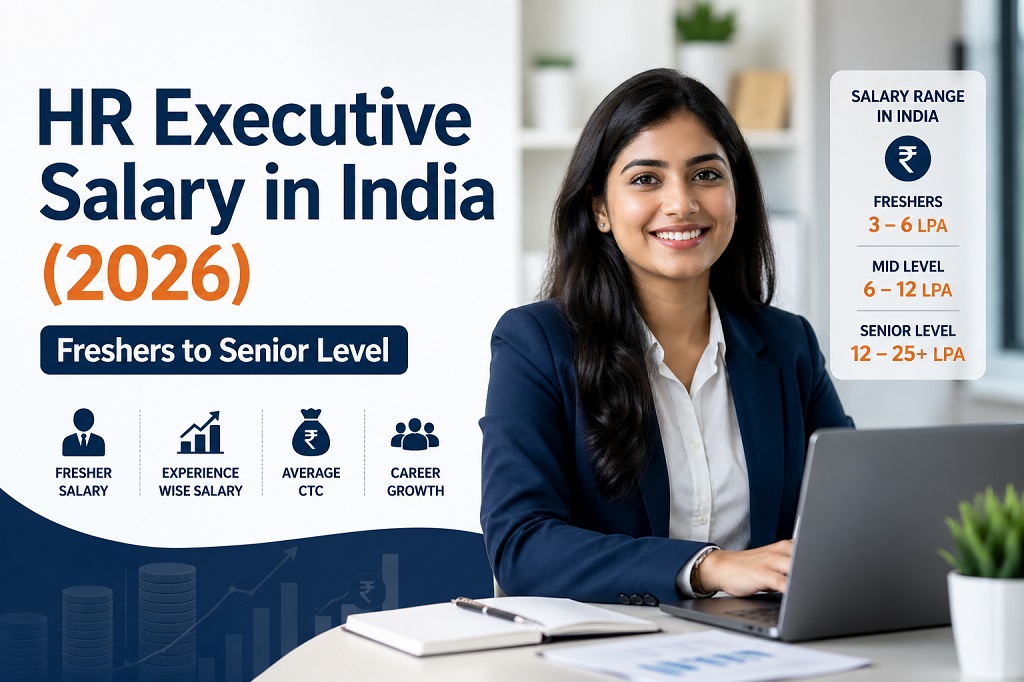
Thinking about a career in Human Resources? Or already working in HR and wondering whether your salary matches what the market is paying? Either way, you are in the right place. The HR profession in India has changed significantly over the past few years. Companies now see HR not just as an administrative function but as a strategic partner that directly impacts business growth, culture, and profitability. As a result, HR salaries across India have seen a steady upward movement.
In this guide, we break down the complete picture of HR executive salary in India in 2026 — by experience, industry, city, and specialisation. Whether you are a fresher starting out, a mid-career professional looking to negotiate a raise, or a senior HR leader benchmarking your CTC, this article has the data and insights you need.
HR Executive Salary in India – Quick Overview (2026)
| Experience Level | Annual Salary (INR) | Monthly (Approx.) |
| Fresher (0–1 Year) | 2.4 – 4.0 Lakhs | ₹20,000 – ₹33,000 |
| Junior HR (2–4 Years) | 4.0 – 7.0 Lakhs | ₹33,000 – ₹58,000 |
| Mid-Level HR (5–8 Years) | 7.0 – 14.0 Lakhs | ₹58,000 – ₹1,16,000 |
| Senior HR (9+ Years) | 14.0 – 35.0 Lakhs | ₹1,16,000 – ₹2,90,000 |
| HR Director / CHRO | 35 Lakhs – 4 Crore+ | ₹2,90,000+ |
The national average HR executive salary in India in 2026 is approximately INR 5.5 to 6.5 Lakhs per annum for someone with 2–5 years of experience. However, this number shifts significantly based on company, city, and specialisation — as we will explore in detail below.
HR Executive Salary by Experience Level
Fresher Salary (0–1 Year)
Starting salaries in HR are modest compared to engineering or finance, but the growth curve can be steep for those who develop the right skills early. In 2026, here is what freshers can realistically expect:
- Non-MBA HR Executive at a small or mid-size firm: INR 2.0 – 3.5 Lakhs per annum
- MBA HR Fresher from a mid-tier college: INR 3.5 – 5.5 Lakhs per annum
- MBA HR Fresher from a premier B-school (XLRI, TISS, SCMHRD): INR 8.0 – 14.0 Lakhs per annum
- HR Recruiter at a staffing or consulting firm: INR 2.5 – 4.0 Lakhs per annum
Practical tip: Freshers who join IT companies, funded startups, or large corporates tend to earn 20–30% more than those starting in traditional or unorganised sectors. Your first job sets the salary anchor — choose it wisely.
2–4 Years of Experience
This is the phase where HR professionals start to specialise and develop a strong track record. Salaries in this bracket typically range from INR 4.0 to 7.0 Lakhs per annum. Those who have built expertise in technical recruitment, HRIS, or employee engagement can push beyond INR 8 Lakhs. Moving from a small company to a larger organisation at this stage can also result in a 30–40% salary jump.
5–8 Years of Experience
The mid-career stage is where salaries diverge sharply depending on the path taken. Generalists continue on a steady growth trajectory, while those who have moved into managerial or specialised roles see significantly higher pay:
- HR Manager: INR 8.0 – 14.0 Lakhs per annum
- HR Business Partner (HRBP): INR 10.0 – 18.0 Lakhs per annum
- Talent Acquisition Manager: INR 9.0 – 16.0 Lakhs per annum
- Compensation and Benefits Specialist: INR 10.0 – 20.0 Lakhs per annum
Senior Level (9+ Years)
Senior HR professionals who operate at a strategic level command some of the highest salaries in the non-technical corporate world in India:
- Senior HR Manager: INR 16.0 – 25.0 Lakhs
- HR Business Partner (Senior): INR 20.0 – 40.0 Lakhs
- Head of HR / HR Director: INR 30.0 – 60.0 Lakhs
- VP – HR: INR 50.0 Lakhs – 1.5 Crores
- CHRO at Large Enterprise: INR 1 Crore – 4 Crores+
HR Executive Salary by Industry
| Industry | Fresher (LPA) | Mid-Level (LPA) | Senior (LPA) |
| IT & Technology | 3.5 – 5.0 | 10.0 – 18.0 | 25.0 – 50.0 |
| BFSI (Banking / Finance) | 3.5 – 5.0 | 9.0 – 16.0 | 22.0 – 45.0 |
| Pharmaceuticals & Healthcare | 2.8 – 4.5 | 7.5 – 13.0 | 16.0 – 30.0 |
| Manufacturing | 2.5 – 4.0 | 7.0 – 12.0 | 15.0 – 28.0 |
| Education and Ed-Tech | 2.5 – 4.0 | 6.0 – 11.0 | 12.0 – 22.0 |
| MNCs (All Sectors) | 4.0 – 6.5 | 10.0 – 20.0 | 25.0 – 60.0 |
IT and BFSI consistently pay 20–35% above the national HR average. If you are currently in a lower-paying industry and have 4+ years of experience, transitioning to IT or financial services is one of the fastest ways to increase your HR salary without changing your designation.
HR Executive Salary by City in India
| City | Avg Salary – 3 to 5 Years Experience (LPA) |
| Bengaluru | 7.0 – 12.0 |
| Mumbai | 6.5 – 11.0 |
| Delhi-NCR | 6.0 – 10.0 |
| Hyderabad | 6.0 – 9.5 |
| Pune | 5.5 – 9.0 |
| Chennai | 5.0 – 8.5 |
| Ahmedabad | 4.5 – 7.5 |
| Tier-2 Cities (Jaipur, Indore, Coimbatore) | 3.5 – 6.5 |
An important nuance here: a salary of INR 6 Lakhs in Ahmedabad or Jaipur often gives you significantly better purchasing power than INR 9 Lakhs in Mumbai or Bengaluru, once rent, commute, and lifestyle costs are factored in. With remote and hybrid work becoming more common, many HR professionals are making a strategic move to Tier-2 cities for a better quality of life without taking a meaningful real-income cut.
Key Factors That Determine HR Salary in India
- Experience and Specialisation: The single most powerful driver of pay growth in HR.
- MBA vs Non-MBA: An MBA from a premier institute adds a 40–60% salary premium in the first five years of a career.
- Company Size and Type: Large enterprises and MNCs pay 15–25% more than small or unorganised companies at the same level.
- Industry: IT and BFSI pay the most; education, NGOs, and manufacturing pay the least.
- Location: Metro cities offer higher absolute salaries; Tier-2 cities offer better real-value compensation.
- Certifications: SHRM-CP, PHR, and People Analytics certifications command a 15–25% salary premium over uncertified peers.
High-Income HR Skills in 2026
The skills that pay the most in HR have shifted considerably. Here is what employers are actively paying a premium for right now:
- People Analytics and HR Data: HR professionals who can use Power BI, Excel, or Tableau to analyse attrition, hiring funnels, and engagement data earn 25–40% more than those who cannot.
- HRIS Expertise: Hands-on experience with Workday, SAP SuccessFactors, Darwinbox, or Zoho People is now a core requirement at most mid-to-large organisations.
- Technical Recruitment: Recruiting for engineering, data science, and product roles is a specialisation that commands significantly higher pay than general recruitment.
- HR Business Partnering: The ability to connect workforce decisions to business outcomes — revenue, productivity, retention — defines the highest-paid HR professionals in India today.
- AI and Digital HR Tools: Familiarity with AI-powered ATS platforms, engagement tools like Leapsome, and digital onboarding platforms is fast becoming table stakes for competitive HR roles.
Career Growth and Salary Progression in HR
| Designation | Typical Experience | Approx. Salary (LPA) |
| HR Executive | 0–3 Years | 2.5 – 5.0 |
| Senior HR Executive | 3–5 Years | 5.0 – 8.0 |
| HR Manager | 5–8 Years | 8.0 – 16.0 |
| Senior HR Manager | 8–11 Years | 15.0 – 25.0 |
| HR Business Partner | 9–13 Years | 20.0 – 40.0 |
| Head of HR / HR Director | 12–18 Years | 35.0 – 70.0 |
| VP HR / CHRO | 18+ Years | 60 Lakhs – 4 Crore+ |
The fastest career accelerators in HR are: choosing a high-demand specialisation early (recruitment, C&B, or analytics), moving to a larger company at each career stage, and consistently demonstrating measurable impact — lower attrition rates, faster time-to-hire, improved engagement scores. These outcomes make you visible and negotiation-ready.
How to Increase Your HR Salary in India
- Invest in the Right Education: An MBA HR from XLRI, TISS, SCMHRD, or Symbiosis provides a strong salary foundation. For working professionals, an executive MBA or PG Diploma in HR from a recognised institution is a solid alternative.
- Earn Global Certifications: SHRM-CP, PHR, or a People Analytics certificate from Wharton or Coursera directly boosts your market value and negotiating power.
- Build High-Income Skills: Learn Power BI or Tableau for people analytics. Get certified on Workday or Darwinbox. These platform skills are in short supply and high demand.
- Switch to a High-Paying Industry: Moving from education or manufacturing to IT, fintech, or BFSI at the same experience level can increase your salary by 30–50% without changing your role.
- Network Strategically: Join NHRDN, SHRM India chapters, and active LinkedIn HR communities. A large percentage of senior HR roles are filled through referrals — being visible in the right circles is a direct career and salary lever.
FAQs – HR Executive Salary in India
Which industry pays the highest HR salary?
The IT and Technology sector pays the highest HR salaries in India, followed closely by BFSI and Global MNCs. HR professionals in these sectors earn 20–35% more than those in manufacturing or education.
What is the highest HR salary in India?
CHROs at large listed enterprises like Infosys, Tata Group, and HDFC Bank earn between INR 1 Crore and INR 4 Crores per annum, including bonuses and ESOPs. VP-HR roles at MNCs typically range from INR 60 Lakhs to INR 1.5 Crores.
Does an MBA significantly increase HR salary?
Yes, particularly in the first five years of a career. MBA HR graduates from premier institutes earn 40–60% more than non-MBA peers at the same experience level. The gap narrows as years of experience and track record become more prominent.
Is HR a good career choice in 2026?
Absolutely. HR is evolving from an administrative function into a data-driven, strategic profession. Demand for skilled HR professionals in people analytics, talent acquisition, and business partnering is growing across all major industries. The earning potential at senior levels is now genuinely competitive with other corporate functions.
Conclusion
HR as a career in India in 2026 is at an exciting inflection point. Entry-level salaries are modest, but for those who invest in the right skills, certifications, and career moves, the earning potential grows substantially at every stage. The highest-paid HR professionals in India are not just good at HR — they are strategic thinkers who speak the language of business, use data to drive decisions, and build organisations where people genuinely want to work.
Whether you are just starting your HR journey or looking to take your career to the next level, the roadmap is clear: build high-income skills, earn relevant credentials, move to the right industry, and network actively. If you are exploring other career options alongside HR, our career and salary guides cover salaries across dozens of job roles in India — all in one place.
The HR profession rewards those who invest in themselves — and in 2026, the returns on that investment are higher than ever.


1 comment