Jobs After B.Com in India (2026): Salary, Government Options & How to Get Hired
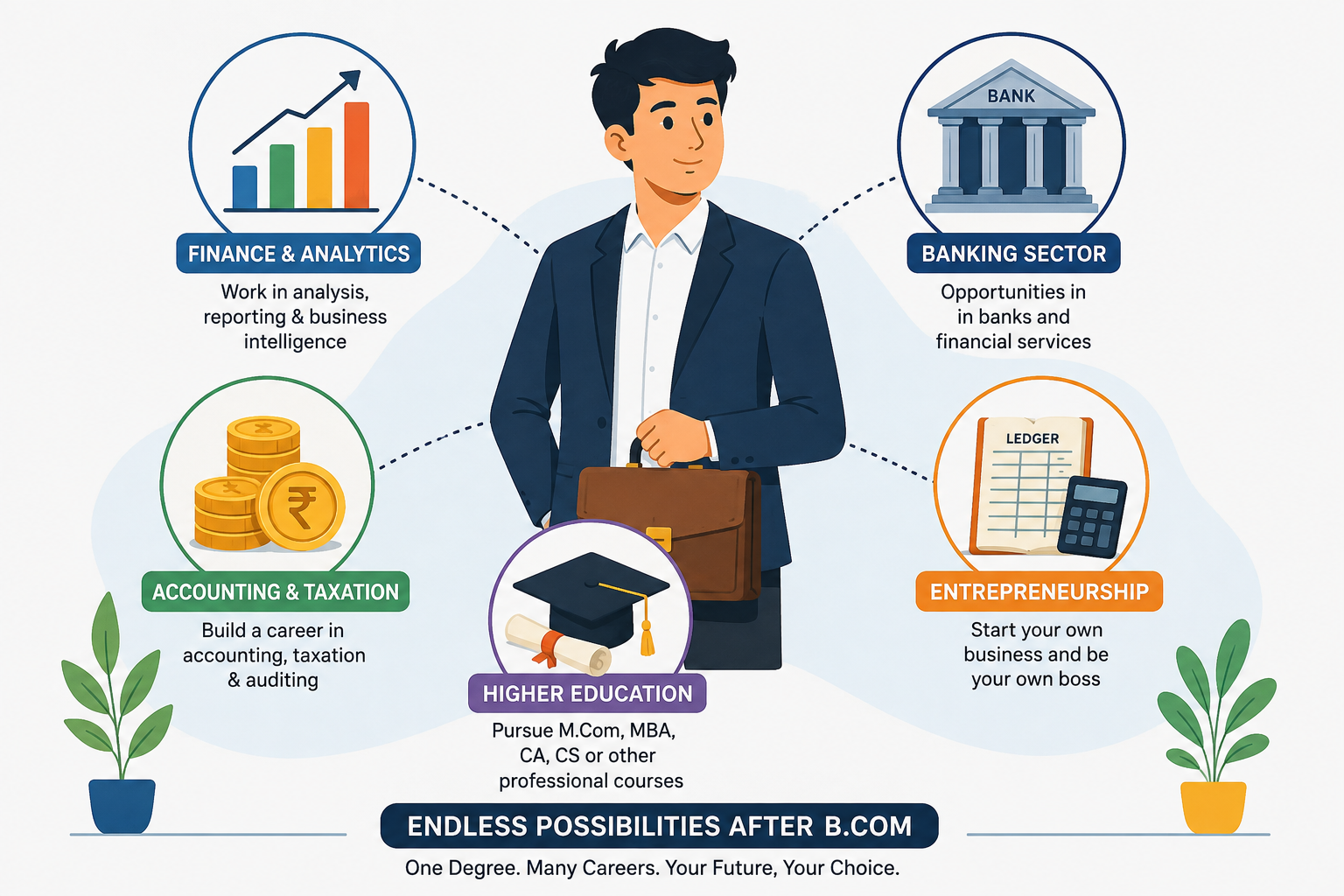
Finishing a B.Com degree feels like an achievement right up until someone asks, “so what’s next?” If you’re exploring jobs after B.Com, you’re not alone — many commerce graduates face the same question about which career path to choose.
This guide breaks down real jobs after B.Com available in 2026, what they actually pay, which government exams are worth your time, and how to land your first offer without wasting a year figuring it out.
Why B.Com Graduates Are in High Demand in 2026
India’s banking, fintech, and e-commerce sectors are expanding fast, and all of them need people who understand numbers, compliance, and business operations. That’s exactly what a B.Com degree trains you for.
Even so, many B.Com students still feel confused about direction after graduation. Part of the problem is that the degree is broad by design — it opens doors to accounting, banking, taxation, and even data-driven roles, but it doesn’t point you toward one specific job the way a professional course does.
Employers today look for more than just the degree on paper. Recruiters consistently prioritize candidates who can demonstrate practical skills — Excel, Tally, basic GST knowledge, or even simple data analysis — over those who rely purely on academic marks.
Best Entry-Level Jobs After B.Com (No Extra Course Needed)
If you want to start earning immediately, several roles are open to you right after graduation, without a professional certification.
Accountant / Accounts Executive
This is the most common entry point. You’ll manage bookkeeping, ledger entries, and financial statements, usually using software like Tally or Zoho Books. It’s a stable starting role that also builds a strong foundation for tax and audit work later.
Banking Executive / Relationship Manager
Private and public sector banks regularly hire B.Com graduates for client account handling, loan processing, and relationship management roles. This path also sets you up well for banking exams later, since you’ll already understand the operations side.
Tax Consultant / GST Executive
With GST compliance now mandatory for most businesses, companies need people who can handle filings and advisory work. This role pairs particularly well with a short-term GST certification.
Audit Associate
Accounting and consulting firms hire fresh graduates to verify financial records and assess internal controls. It’s demanding early on but opens a fast track into the Big 4 firms if you perform well.
Business Development / Sales Executive
Not every B.Com job is number-crunching. If you’re more comfortable with people than spreadsheets, business development roles let you use your commerce background in client-facing, target-driven work.
Quick Salary at a Glance (Freshers in 2026)
| Role | Fresher Salary (Annual) | Key Skills Needed |
| Accounts Executive | ₹2.5-4 LPA | Tally, MS Excel, basic taxation |
| Banking Executive | ₹3-5 LPA | Communication, basic finance |
| Tax/GST Executive | ₹3-5 LPA | GST rules, Excel |
| Audit Associate | ₹3.5-6 LPA | Attention to detail, MS Office |
| Sales/BD Executive | ₹2.5-5 LPA (plus incentives) | Communication, negotiation |
Government Jobs After B.Com (With Salary)
If job security and structured growth matter more to you than a fast start, government roles are worth serious consideration.
Banking Exams (IBPS PO/Clerk, SBI PO, SBI Clerk)
These remain some of the most popular options for commerce graduates. Clearing IBPS PO or SBI PO gets you into officer-level roles with strong long-term benefits, while clerk-level exams offer an easier entry point.
SSC CGL
The SSC CGL exam recruits for central government Group B and C posts, including Tax Assistant, Auditor, and Junior Statistical Officer roles. Any bachelor’s degree with 50% marks qualifies you, and B.Com graduates often have an advantage in the quantitative sections. If you’re specifically weighing this path, our detailed breakdown of the SSC CGL salary structure covers post-wise pay in full.
Railway Jobs After B.Com (RRB NTPC)
Indian Railways recruits extensively for non-technical posts like Junior Accountant and Commercial Clerk through RRB NTPC — a solid option if you want government stability without an extremely tough exam.
RBI Grade B Officer
This is one of the most prestigious roles available to commerce graduates, placing you inside India’s central bank with excellent pay and prestige, though the exam is genuinely difficult.
LIC AAO and PSU Roles
Insurance and public sector companies like LIC, BHEL, and ONGC also hire B.Com graduates for finance, accounts, and administrative positions, generally through their own recruitment exams.
For a full picture of what banking-sector government roles actually pay, this guide on bank PO and clerk salaries is worth bookmarking before you start preparing.
How Much Do B.Com Freshers Actually Earn in 2026?
Here’s the honest picture: a plain B.Com degree, without any additional skill or certification, typically starts you at ₹2-4 LPA. Add a relevant certification like SAP FICO or a data analytics course, and that range often jumps to ₹4-8 LPA.
Location matters too. Freshers in Mumbai, Bangalore, or Delhi generally command 20-30% higher starting packages compared to tier-2 cities, though the cost of living difference often evens things out.
Salary growth after the first job depends heavily on skill-building. Graduates who stay with just their degree tend to see slow, incremental raises — often 8-12% annually — while those who add certifications or move into analytical roles see much sharper jumps.
Higher-Paying and Upcoming Roles for B.Com Graduates
Beyond the standard accounting track, several growing fields are actively recruiting commerce graduates.
- Financial Analyst — evaluating investment performance and supporting business decisions, typically ₹4-6 LPA to start
- Investment Banking Associate — a demanding but high-paying path, especially for those who pair B.Com with an MBA or CFA
- Data Analyst in Finance — using Excel, SQL, and Power BI to interpret financial data, increasingly one of the highest-paying jobs after B.Com once you build the technical skill set
- Digital Marketing / E-Commerce Executive — a non-traditional but fast-growing option for commerce graduates comfortable with digital tools
- Compliance Officer — ensuring regulatory adherence, a role in high demand as SEBI and RBI regulations tighten
Professional Courses That Multiply Your Salary
If you’re aiming for a significantly higher earning ceiling, a professional qualification changes the math substantially.
Chartered Accountancy (CA), regulated by the Institute of Chartered Accountants of India, remains the most respected commerce qualification in the country. It takes three to five years alongside articleship training, but a qualified CA typically earns ₹8-20 LPA at the associate level, climbing considerably higher with experience.
Other strong options include:
- Company Secretary (CS) — corporate governance and legal compliance, starting around ₹5-8 LPA at listed companies
- Chartered Financial Analyst (CFA) — globally recognized, ideal for investment management and equity research
- Cost and Management Accountant (CMA) — strong fit for manufacturing and cost-control roles
- ACCA, CPA, FRM — international certifications useful if you’re eyeing global finance roles
If a multi-year commitment doesn’t suit you right now, short-term certifications offer a faster return. GST Practitioner certification, Tally Prime training, and SAP FICO courses can all be completed in a few months and meaningfully boost your starting salary.
MBA vs M.Com vs Job — Which Path Should You Choose?
| Factor | MBA | M.Com | Direct Job |
| Duration | 2 years | 2 years | Immediate |
| Cost | High (unless scholarship) | Low | None |
| Best for | Management, leadership roles | Academic depth, teaching | Quick income |
| Earning ceiling | High, especially from top institutes | Moderate | Depends on skill-building |
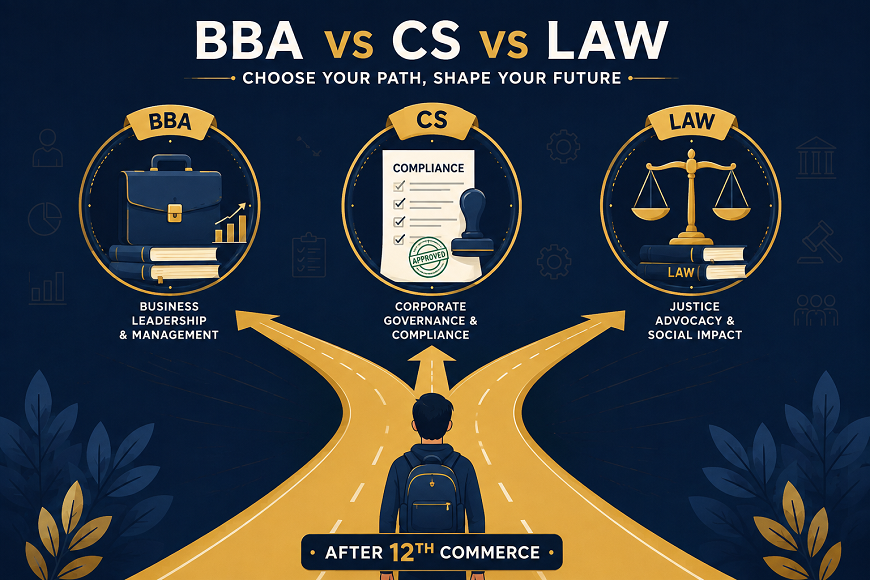
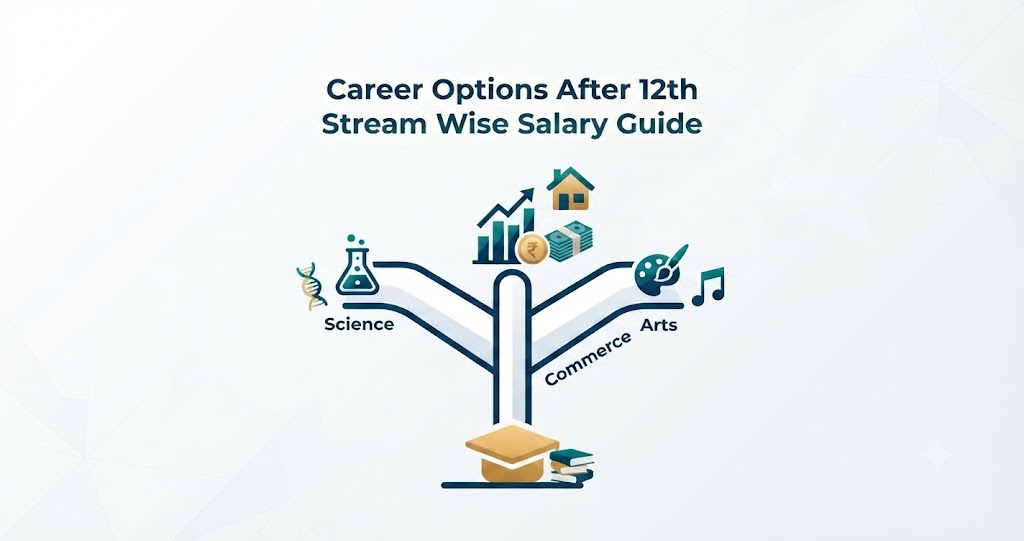
If you’re unsure which route fits your goals, this comparison of career options after 12th can help you think through the bigger picture before committing to a postgraduate path.
B.Com Jobs Without CA — Is It Still Worth It?
Absolutely, though it requires a slightly different strategy. Without a professional certification, your career ceiling depends heavily on the skills you build on top of the degree. Data analytics, digital marketing, and advanced Excel or SAP knowledge can substitute effectively for a postgraduate qualification, especially in private-sector roles that value practical output over formal credentials.
Work-From-Home, Freelance & Startup Options After B.Com
Remote and freelance work has genuinely opened up for commerce graduates. Virtual bookkeeping, freelance tax filing during tax season, and financial content writing are all realistic options that require no office commute.
Some graduates also use their commerce foundation to start small consulting practices or trading businesses, particularly once they’ve built enough client relationships through an earlier job.
Career Switch Options: B.Com Graduates Moving Into Tech
It might sound unusual, but commerce graduates are increasingly moving into business analytics, cloud computing support roles, and big data-adjacent positions — not as coders, but as professionals who understand both the business logic and the numbers behind it. This combination of commerce fundamentals and basic technical fluency is becoming genuinely valuable across fintech and analytics teams.
How to Choose the Right Career After B.Com
- Based on interest: If you enjoy structured, detail-heavy work, accounting or audit suits you. If you prefer people-facing work, sales or banking relationship roles fit better.
- Based on skills: Strong with numbers and software? Lean toward analytics or finance. Strong communicator? Consider banking or business development.
- Based on long-term growth: Government roles offer stability; private-sector and analytics roles offer faster salary growth but less security.
Skills That Improve Your Job Prospects After B.Com
Technical skills: Advanced Excel, Tally, GST filing, basic SQL, and SAP FICO consistently top employer wish lists for commerce graduates.
Soft skills: Clear communication, negotiation ability, and analytical thinking matter just as much, particularly for client-facing or leadership-track roles.
Common Mistakes B.Com Graduates Make After Graduating
- Waiting two or three years for CA results with no backup plan or income
- Assuming the degree alone is enough, without adding any practical skill
- Applying to jobs with a generic resume that doesn’t highlight relevant coursework or tools
- Skipping aptitude test practice, which trips up many candidates in banking and SSC exams
- Ignoring smaller companies in favor of only applying to large, well-known brands
How to Get Your First Job After B.Com: A Step-by-Step Guide
- Identify your strongest area — accounting, sales, or analytics — based on what you enjoyed most during your degree
- Build a resume that highlights tools you know, even from college projects; our guide on resume formats for freshers walks through exactly what recruiters expect from candidates with no prior work experience
- Add one certification relevant to your target role before applying, even a short one
- Practice basic aptitude questions, since most banking and government exams test quantitative ability heavily
- Apply broadly rather than waiting for your dream company, and treat your first job as a stepping stone
If you’re ready to start looking, you can register your profile here to get matched with genuine openings as they come in, rather than scrolling endlessly through listings yourself.
For government exam updates specifically, the National Career Service portal, run by the Ministry of Labour and Employment, is a reliable place to track official notifications.
Frequently Asked Questions
What are the jobs after B.Com and their salary?
Entry-level roles like accounts executive and banking associate start around ₹2.5-5 LPA, while professional qualifications like CA can push earnings to ₹8-20 LPA within a few years.
Can I get a government job with just a B.Com degree?
Yes. B.Com fully qualifies you for SSC CGL, most banking exams (IBPS, SBI), RRB NTPC, and several PSU recruitment drives, since most require only a bachelor’s degree.
What government jobs can I do after B.Com Hons?
B.Com Hons graduates are eligible for the same government exams as regular B.Com graduates, though the deeper coursework can be an advantage in the quantitative and reasoning sections.
Is B.Com useless without CA?
Not at all. Plenty of B.Com graduates build strong careers in banking, analytics, and corporate roles without ever attempting CA, especially if they add practical skills along the way.
What is the average B.Com fresher salary in India?
Most freshers start between ₹2.5 and ₹4 LPA without additional certifications, rising to ₹4-8 LPA with relevant skills like SAP FICO or data analytics.
Can I get a good job after B.Com without an MBA?
Yes. Many B.Com graduates move directly into accounting, banking, or analytical roles and grow steadily through experience and certifications, without ever pursuing an MBA.
Are remote or work-from-home jobs common for B.Com graduates in 2026?
They’re becoming increasingly common, particularly in bookkeeping, tax filing, and financial content roles, though full-time remote positions are still less common than hybrid setups.
What if I have no experience or internship after B.Com?
Focus your resume on college projects, any part-time work, and specific software skills you know. Many entry-level roles are designed for exactly this situation.
Which course after B.Com is best for a high salary?
If you want the highest ceiling and don’t mind a multi-year commitment, CA remains the strongest option. For faster returns, data analytics or SAP FICO certifications offer a better time-to-salary ratio.
Conclusion
A B.Com degree is a solid foundation, not a finished career plan. Whether you go straight into a job, prepare for a government exam, or invest in a professional certification, the direction you choose matters far less than the consistency you bring to building relevant skills afterward.
Start with one clear path, add practical skills as you go, and treat your first job as a stepping stone rather than a final destination. For more guides on salaries, career paths, and job opportunities, explore Career Salary Hub.

Post Comment