For Gen Z in India, Salary Still Matters — But It’s No Longer the Whole Career

For a long time, choosing a job in India came down to a fairly familiar calculation: salary, company name and career growth. Today, that calculation is evolving into a sharper conversation — the salary vs quality of life debate — as young professionals weigh a bigger paycheck against the life it actually lets them live. The higher the package, the better the opportunity appeared to be. For young professionals entering the workforce today, that calculation is becoming more complicated. Salary still matters, perhaps more than ever in an economy where financial independence is difficult to achieve, but it is increasingly being weighed against something that is harder to put on an offer letter: the quality of life that comes with the job.
Salary vs Quality of Life: Why the Old Career Calculation Is Changing
For years, a bigger number on the offer letter was treated as the whole answer. That’s no longer true. The salary vs quality of life question is now central to how young Indian professionals decide whether a job is actually worth taking — because a high CTC that costs your evenings, weekends and peace of mind isn’t the win it looks like on paper.
What Gen Z Actually Wants From a Salary
It’s Not About Rejecting Money
This does not mean Gen Z has stopped caring about money. The idea that young workers would happily accept a lower salary simply for “work-life balance” misses the point. What appears to be changing is the definition of what makes a salary attractive. A higher number is valuable only when the person receiving it can actually build a sustainable life around the work that produces it.
The Real Question — “What Am I Getting in Return?”
The question, therefore, is shifting from “How much does this job pay?” to “What am I getting in return for the time and energy this job requires?”
Why a Higher CTC Doesn’t Always Mean a Better Job
₹12 LPA vs ₹16 LPA — The Hidden Cost Comparison
That distinction becomes important when comparing two otherwise similar jobs. Suppose one offers ₹12 lakh a year and another offers ₹16 lakh. On paper, the second is clearly better. But the calculation changes if the higher-paying role involves significantly longer working hours, an exhausting commute, little flexibility, constant availability or a workplace culture that makes employees uncomfortable taking leave. The additional ₹4 lakh is not free. It is being exchanged for something else, even if that cost never appears in the CTC. This is exactly the kind of trade-off the salary vs quality of life debate is about — you can explore real offer comparisons in our Salary Comparison section.
CTC vs In-Hand Salary — The Gap No One Talks About
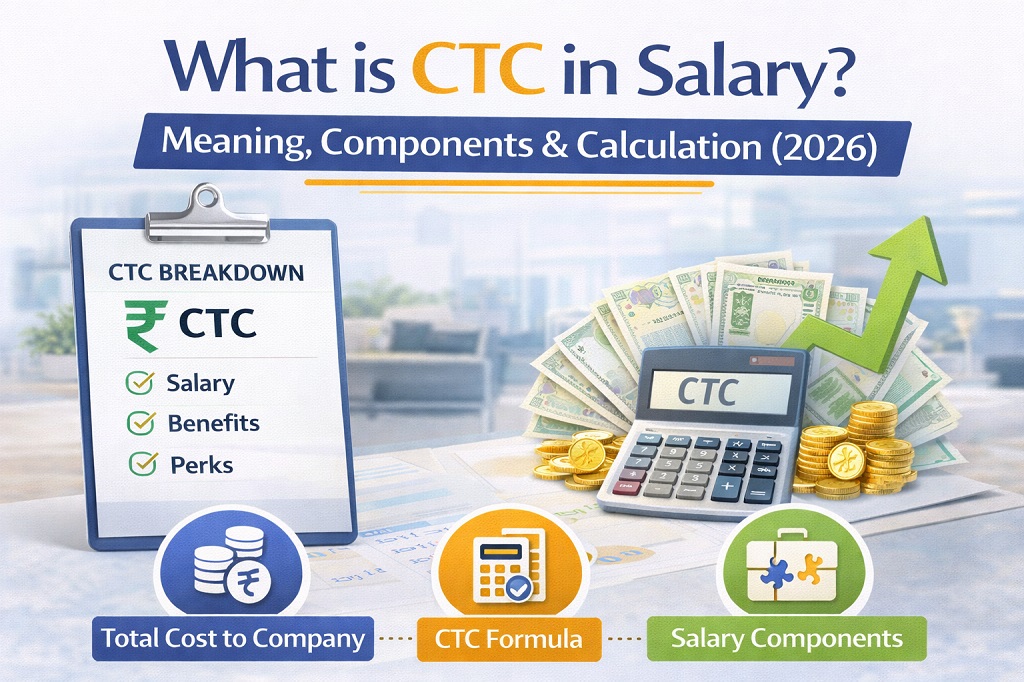
This is particularly relevant because salary itself is already a misleading measure of compensation. Employees are increasingly learning that CTC is not the same thing as money in the bank. Employer contributions, gratuity, variable pay, insurance and deductions can create a significant gap between the headline package and actual take-home income — including statutory components such as the Employees’ Provident Fund, which is deducted before a salary ever reaches your account.
The Hidden Price of a High-Paying Job
Time is one of the biggest missing components.
Long Hours and Commute Eat Into Real Life
An employee who spends ten or twelve hours a day working has less time for family, health, relationships, learning or even rest. A long commute adds another hidden cost.
Constant Availability and the “Always On” Culture
Constant messages outside working hours create another cost. So does the inability to disconnect from work during weekends or leave. None of these costs reduce the salary credited to the bank account. But they reduce the amount of life available to enjoy that salary.
Mental Peace vs Financial Security — Is It Really a Trade-Off?
Why Financial Insecurity Also Creates Stress
This is where mental peace becomes relevant to a career decision. It should not be treated as an alternative to financial security. Financial insecurity can itself create enormous stress, and a meaningful increase in income can improve a person’s quality of life. The real issue is not whether money or mental peace is more important — a balance often discussed under the concept of work–life balance. It is whether the additional income is large enough to justify the additional cost imposed on the employee.
Demanding Job vs Toxic Workplace — Know the Difference
There is also a difference between a demanding job and an unhealthy workplace. A demanding role can provide skills, exposure and faster career growth. Difficult deadlines and periods of intense work are sometimes part of professional development. But when pressure becomes constant, when employees are afraid to communicate, when work begins affecting their health or when anxiety becomes part of the daily routine, the salary needs to be viewed differently. Employees experiencing this shift can also read up on their rights and protections in our Work Culture section, or refer to India’s official labour regulations via the Ministry of Labour & Employment.
At that point, the question is no longer simply whether the job pays well. It is whether the job is sustainable.
How Gen Z Is Redefining “A Good Career”
Flexibility, Culture and Growth Alongside Salary
This may explain why younger workers increasingly ask about flexibility, workplace culture, learning opportunities and career progression alongside compensation. Recent workforce findings in India suggest that Gen Z is not necessarily rejecting traditional career ambitions; rather, many are willing to trade some salary for flexibility and other aspects of work that they value. That is a different proposition from saying that money does not matter. In fact, salary may matter precisely because Gen Z wants more control over what that salary enables them to do.
Trading Some Salary for Better Work Conditions
Financial independence remains important. So does the ability to save, invest, support family and afford a better standard of living. But if earning more leaves no time to use that money, the relationship between income and quality of life becomes less straightforward.
How to Compare Job Offers: A Salary vs Quality of Life Checklist
Calculate Effective Hourly Compensation
This also changes how job seekers should compare offers. Instead of looking only at CTC, candidates could consider effective hourly compensation: how much are they earning relative to the total time the job demands? Thinking in terms of salary vs quality of life at this stage helps you catch trade-offs the CTC figure alone won’t show. You can run your own numbers instantly using our free CTC Calculator.
Factors Beyond CTC You Should Evaluate
They could also evaluate flexibility, commute, leave, variable pay, job security, learning opportunities and the likely trajectory of the role. A slightly lower salary with better growth and sustainable working conditions may be worth considerably more over several years than a higher salary attached to a role with limited progression and constant burnout.
Should You Leave a High-Paying but Toxic Job?
The Opportunity Cost of Staying
The same thinking applies to career changes. Leaving a toxic or unsustainable workplace is sometimes described as “giving up” or choosing comfort over ambition. But staying in a job solely because the salary is difficult to replace can also carry an opportunity cost. Time spent surviving an unsuitable environment is time that cannot be spent developing skills, building a network or finding a role that offers better long-term growth.
When “Giving Up” Is Actually a Smart Career Move
Perhaps the most useful way to think about salary, then, is not as the price of a job but as one part of the overall return from a career. A good career should provide financial security, but it should ideally provide something else too: skills that compound, opportunities that grow, relationships that do not have to be sacrificed, and enough personal time to make the income meaningful.
Final Thoughts: Salary Is One Part of the Return, Not the Whole Career
Gen Z may not be choosing mental peace over salary. It may simply be refusing to treat salary as the only measure of a good career.
And that is an important distinction. Because the highest-paying job is not necessarily the most valuable one. The better question is whether the combination of money, growth, time and well-being makes the career sustainable.
Ultimately, the salary vs quality of life conversation isn’t about choosing one over the other — it’s about making sure both work together, so the income you earn actually improves the life you live.
After all, the purpose of earning a better income is to improve the quality of life that income supports. If the job leaves no quality of life left to support, the salary deserves a second look. For more career and salary guidance tailored to Indian professionals, explore Career Salary Hub.
About the Author
Nandni Joshi is an Economics researcher and writer with interests in behavioural economics, labour markets and public policy. Her work focuses on translating economic research and behavioural insights into accessible analysis of contemporary workplace, career and policy issues. She has experience in research, data analysis and policy-focused writing.


Post Comment