Salary & wage laws
employee rights in india, indian employment law guide, labour law compliance india, legal work hours per week india, legal working hours in india, maximum working hours in india, overtime pay rules india, overtime rules in india, working hours for private companies india, working hours rules in india
Ayushi
2 Comments
Working Hours Rules in India: Laws, Overtime, and Employee Rights
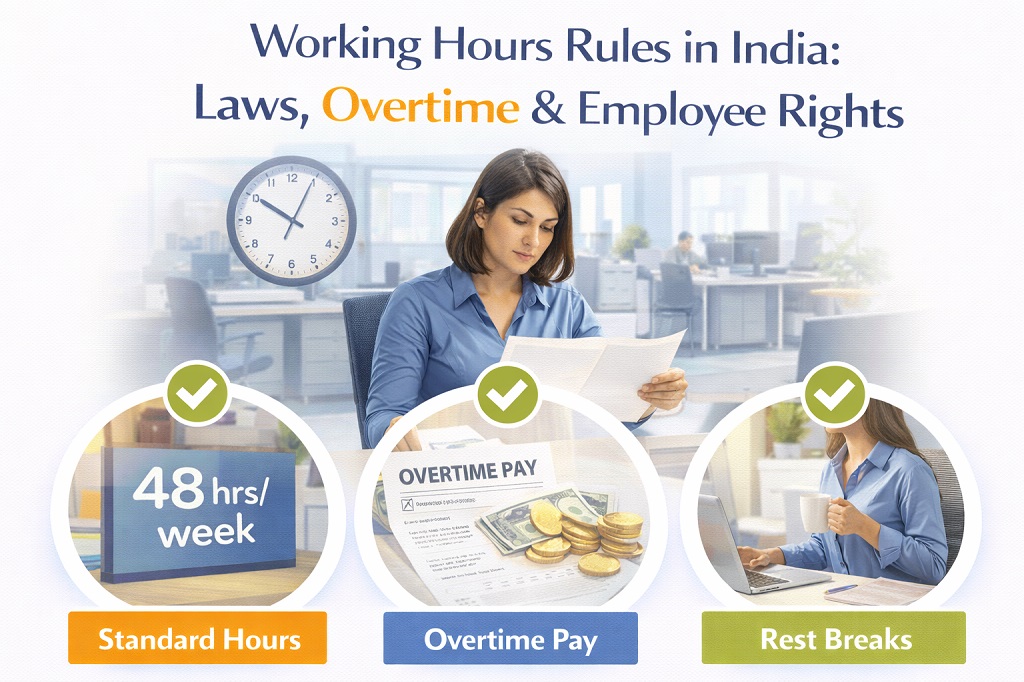
Understanding working hours rules in India is essential for both employees and employers. These rules help maintain a fair balance between productivity and employee well-being. Without proper regulation, employees may face excessive workloads, while businesses could struggle with inconsistent work standards.
Labour laws in India regulate how long employees can work each day and week. They also define overtime compensation, rest breaks, and weekly holidays. These rules are designed to protect workers from overwork while ensuring businesses operate efficiently.
For employees, knowing these regulations helps them understand their rights regarding overtime pay, rest periods, and legal work limits. For employers, compliance with labour laws helps avoid penalties, legal disputes, and reputational damage. In short, working hour regulations create a fair and structured workplace environment for everyone.
Legal Framework for Working Hours in India
Key Labour Laws Governing Working Hours
India has multiple laws governing working hours, depending on the sector and type of employment. Key regulations include:
| Law | Coverage | Key Provisions |
|---|---|---|
| Factories Act, 1948 | Manufacturing and industrial sectors | Maximum 48 hours/week, 9 hours/day; overtime pay; rest intervals |
| Shops and Establishments Act | Offices, shops, and commercial establishments (state-specific) | Daily and weekly hour limits, rest breaks, holidays |
| Occupational Safety, Health and Working Conditions Code, 2020 | Broad coverage across sectors | Employee safety, work hour regulations, night shift norms, welfare provisions |
Purpose of Working Hour Regulations
Labour regulations serve several important goals:
Employee protection
They prevent excessive work hours that could harm workers physically or mentally.
Workplace productivity
Well-rested employees perform better, make fewer mistakes, and contribute more effectively to business success.
Work-life balance
Structured working hours allow employees to spend time with family, pursue personal interests, and maintain mental well-being.
Standard Working Hours in India
Working hours in India generally follow widely accepted global standards.
Maximum Daily and Weekly Working Hours
Most labour laws define the standard schedule as:
| Work Limit | Standard Rule |
|---|---|
| Daily work hours | 8–9 hours |
| Weekly work hours | Maximum 48 hours |
| Weekly holiday | At least one day off |
For example, a typical office schedule may run from 9:00 AM to 6:00 PM with a lunch break, totaling about eight working hours.
Spread Over Rule
The spread-over rule refers to the total duration from when an employee begins work to when they finish, including breaks.
For example:
-
Start time: 9:00 AM
-
Lunch break: 1 hour
-
End time: 6:00 PM
Although only eight hours are spent working, the overall spread of the workday becomes nine hours.
This rule prevents employers from stretching workdays excessively with long gaps between tasks.
Typical Work Schedules Across Industries
| Industry | Standard Hours | Notes |
|---|---|---|
| IT and Corporate | 9–10 hours/day | Flexible schedules common |
| Manufacturing & Factories | 8–9 hours/day | Compliance with Factories Act |
| Service & Informal | Varies | Often less regulated; compliance encouraged |
Managerial and Exempt Employees
Certain managerial or supervisory employees may be exempt from standard working hour limits but must still follow guidelines for rest and overtime where applicable.
Overtime Rules Under Indian Labour Law
Overtime rules ensure employees receive fair compensation when they work beyond standard hours.
What Counts as Overtime
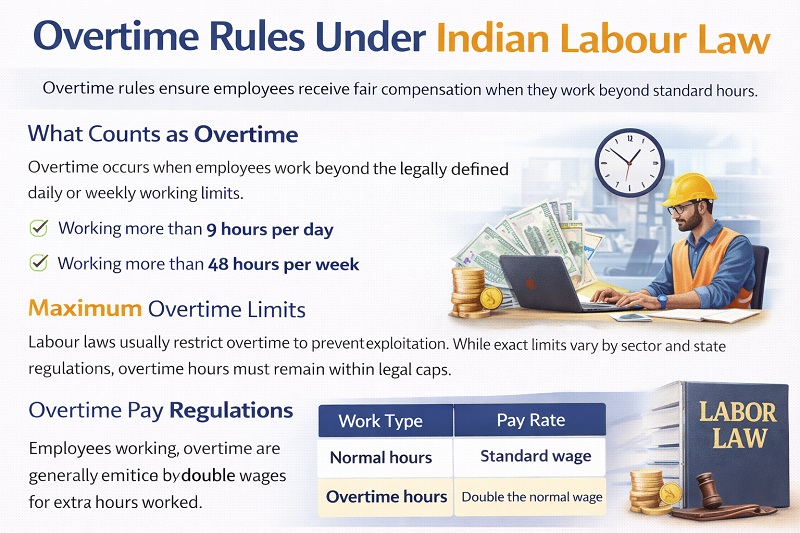
Overtime occurs when employees work beyond the legally defined daily or weekly working limits.
For example:
-
Working more than 9 hours per day
-
Working more than 48 hours per week
Maximum Overtime Limits
Labour laws usually restrict overtime to prevent exploitation. While exact limits vary by sector and state regulations, overtime hours must remain within legal caps.
Overtime Pay Regulations
Employees working overtime are generally entitled to double wages for extra hours worked.
| Work Type | Pay Rate |
|---|---|
| Normal hours | Standard wage |
| Overtime hours | Double the normal wage |
For example, if an employee earns ₹200 per hour, overtime work should pay ₹400 per hour.
Breaks, Rest Periods and Holidays
Regular breaks help employees maintain productivity and prevent fatigue.
Mandatory Rest Intervals During Work
Employees working long shifts must receive rest breaks. Typically:
-
A break after 5 hours of continuous work
-
Lunch or tea breaks during the day
Weekly Off Rules
Employees must receive at least one weekly holiday, usually Sunday or another fixed day depending on company policy.
National and Festival Holidays
Employees are also entitled to holidays during national celebrations such as:
-
Republic Day
-
Independence Day
-
Gandhi Jayanti
Many organizations also provide additional festival holidays.
Minimum Rest Between Shifts
Workers should receive at least 12 hours of rest between shifts, ensuring they recover before returning to work.
Night Shifts and Flexible Work Arrangements
Modern workplaces often require flexible scheduling.
Night Shift Regulations
Certain industries operate around the clock. Employees working night shifts must receive:
-
Safe transportation where required
-
Proper rest breaks
-
Compliance with labour regulations
Flexible Work Schedules
Many organizations now offer:
-
Flexible start and end times
-
Hybrid work models
-
Compressed workweeks
Remote and Part-Time Work Options
The rise of remote work has changed traditional working hours. However, labour laws still apply when defining working hours and overtime.

2 comments