HR practices
career advice, corporate rules, employee notice period policy, employee resignation, employment contract, employment contract notice period, how to reduce notice period, HR policies, job leaving process, job switch tips, minimum notice period in private company, notice period, notice period buyout option, notice period for resignation, notice period meaning, notice period salary calculation, private company notice period rules, private job rules, resignation notice period, salary settlement
Ayushi
11 Comments
What Is Notice Period in a Private Company? Meaning, Rules, and Options

A notice period in a private company is the duration an employee is required to inform their employer before leaving the organization. It acts as a formal courtesy and ensures that both the employee and the company have enough time to manage the transition smoothly.
For employees, understanding the notice period is important because it affects final settlements, relieving letters, and future job references. For employers, it helps maintain workflow continuity, allows proper handover of responsibilities, and minimizes disruption in business operations.
In private companies, notice periods can vary depending on the role, seniority, and company policies, making it essential for employees to carefully read their employment contract and plan their exit professionally.
What Is a Notice Period?
In employment terms, a notice period is the time between an employee’s resignation and their last working day or the time an employer provides notice before terminating an employee’s employment. It’s a formal requirement outlined in an employment contract, and its main purpose is to allow both parties to make necessary arrangements for a smooth transition.
Why Companies Include Notice Periods
Private companies generally include notice periods in their contracts to ensure continuity and stability. For employers, this period allows time to find a replacement or redistribute the employee’s responsibilities. For employees, it provides an opportunity to wrap up projects and hand over responsibilities, which contributes to a professional exit.
In the public sector, notice periods are often more structured and governed by more rigid government policies, whereas in private companies, they can be more flexible and vary depending on the company’s internal policies and role.
How Notice Period Works (Step-by-Step)
-
Resignation Submission: An employee submits their resignation letter, either verbally or in writing, initiating the notice period.
-
Acknowledgement of Resignation: The employer acknowledges the resignation, and the notice period begins officially.
-
Start Date: The start date of the notice period is typically the date of resignation or a mutually agreed-upon date in the resignation letter.
-
Handover & Knowledge Transfer: The employee may need to hand over ongoing projects and provide knowledge transfer (KT) to a replacement or team.
-
Exit Formalities: These include clearing dues, returning company assets, and receiving a relieving letter or experience certificate from the employer.
Typical Notice Period Duration in Private Companies
| Role / Employment Type | Common Notice Period |
|---|---|
| Freshers / Entry Level | 15–30 days |
| Mid-level Employees | 30–60 days |
| Senior Management | 60–90 days |
| Probationary Employees | 15 days (common) |
Variations occur based on seniority, department, and contract type.
Probationary employees usually have a shorter notice period than confirmed staff.
Notice Period in the Employment Contract
Employment contracts clearly define the terms of the notice period. Here’s what they typically include:
-
Employee obligations: This may include fulfilling duties, handing over assets, and completing pending work during the notice period.
-
Employer obligations: Ensuring that the final settlement, including salary, bonuses, and benefits, is cleared in a timely manner. Employers are also responsible for providing relieving or experience letters.
-
Consequences: If an employee leaves without serving the full notice period, they may be liable to pay the company for the unserved period (buyout).
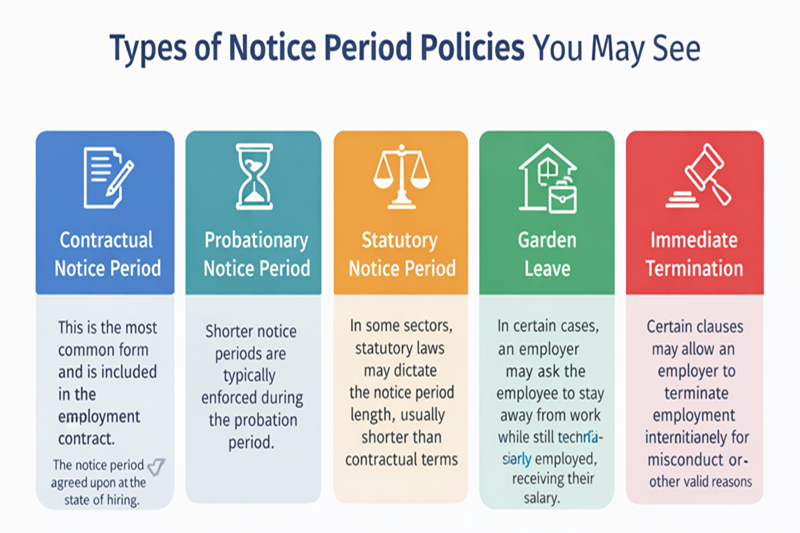
Types of Notice Period Policies You May See
-
Contractual Notice Period: This is the most common form and is included in the employment contract. The notice period is agreed upon at the time of hiring.
-
Probationary Notice Period: Shorter notice periods are typically enforced during the probation period.
-
Statutory Notice Period: In some sectors, statutory laws may dictate the notice period length, usually shorter than contractual terms.
-
Garden Leave: In certain cases, an employer may ask the employee to stay away from work while still technically employed, receiving their salary.
-
Immediate Termination: Certain clauses may allow an employer to terminate employment immediately for misconduct or other valid reasons.
Is a 30-Day Notice Period Mandatory in Private Companies?
A 30-day notice period is not always mandatory unless stipulated in the employment contract. Some companies offer flexibility, but the notice period typically depends on the role, industry standards, and company policies. If an employee or employer wants to reduce or waive the notice period, they must come to a mutual agreement.
Can You Resign Without Serving Notice?
While it is possible to resign without serving the notice period in certain exceptional cases, this can lead to complications. If an employee leaves without serving the full notice, they may face:
- Legal consequences: Breach of contract, withholding of salary, or failure to receive a relieving letter.
- Future employment issues: Potential difficulty in getting references or verification from the previous employer.
Notice Period Buyout (Pay in Lieu of Notice)
In a notice period in private company, both the employee and employer are usually required to follow the agreed resignation timeline mentioned in the employment contract. However, in certain situations, they may mutually decide to end the employment earlier than the standard notice period in private company policy allows.
In such cases, a notice period buyout becomes a practical solution. This means the employee compensates the employer by paying salary for the unserved portion of the notice period in private company rules, or in some cases, the employer may choose to waive the notice and compensate the employee instead.
The buyout amount under a notice period in private company is generally calculated based on the employee’s basic salary or gross salary, depending on the company’s HR policy and employment agreement terms.
Options During Notice Period (Practical Choices)
-
Serve full notice: This ensures smooth transition and professional conduct.
-
Negotiate early release: If circumstances allow, both parties may agree to reduce the notice period.
-
Buyout: Employees can pay a fee in lieu of the notice period, with mutual consent.
-
Leave during notice period: Employees may take leave during the notice period, subject to employer approval.
How to Reduce Your Notice Period (Proven, Practical Tactics)
-
Request early: Start the conversation with your manager early to avoid last-minute complications.
-
Offer a structured handover plan: Provide a detailed plan for handing over tasks to a colleague.
-
Identify a backup: Train a successor to ensure continuity after your departure.
-
Align with manager and HR: Ensure all terms are clear and get written confirmation.
What Happens If You Don’t Serve the Notice Period?
Failing to serve the notice period can result in several negative consequences:
- Deductions: Employers may deduct the pay for the unserved period.
- Relieving letter issues: Without serving the notice, the employee might not receive their relieving or experience letter, which could affect future job opportunities.
- Legal complications: Employees may face legal issues if their contract explicitly requires them to serve notice.
Employee and Employer Responsibilities (Checklist Style)
| Employee Responsibilities | Employer Responsibilities |
|---|---|
| Complete tasks on time | Ensure timely final settlement |
| Return company assets | Provide necessary documentation (experience certificate, relieving letter) |
| Maintain confidentiality during the notice period | Support the transition process |
| Ensure a smooth handover of responsibilities |
Legal Considerations in India (High-Level, Practical)
In India, labor laws provide guidelines for notice periods, but employers usually define the actual policy. Employees must serve the statutory notice period as required by labor laws, and failing to do so can lead to consequences. Always make sure your employment contract clearly states the notice period terms.
How to Answer: “What Is Your Notice Period?”
When asked about your notice period in an interview, be clear and concise:
-
Mention the exact days in your contract.
-
If negotiable, express your willingness to discuss it further.
-
Align your availability with the company’s needs without overcommitting.
FAQs
Can I negotiate a shorter notice period?
Yes, if both parties agree. Propose a smooth handover plan to facilitate a quicker exit.
What is buyout/pay in lieu of notice?
It’s a financial compensation paid to the employer in place of serving the full notice period.
What happens if I do not serve the full notice period?
It may result in legal complications, salary deductions, and trouble obtaining a relieving letter.
Final Thoughts
Understanding the notice period in a private company is crucial for both employees and employers. It ensures a smooth transition and protects both parties’ interests. Always refer to your employment contract and communicate openly to manage your notice period effectively.
For more insights on employment terms, salaries, and workplace rights, you can visit Career Salary Hub to explore guides and resources that help you make informed career decisions.
Check your employment contract today to ensure you understand your notice period terms!


11 comments